The US government is the largest venture capital firm – with enormous resources of money, time and patience – and one of the world’s most successful. Public grants and subsidies to start-ups like Tesla, Amazon, Apple and Microsoft jumpstarted what became behemoth successes. Yet, as professor Scott Galloway notes in this bracing commentary, many of the beneficiaries tend to disparage government investment in research and innovation. Galloway makes a bold case for the deep pockets and patient capital that has helped foster private sector development in the United States for decades, and he proposes that more of those rewards go to US taxpayers.
Take-Aways
The US government is the oldest and largest venture capitalist in the world.
Scientific research is capital- and time-intensive.
The relationship between Big Tech and the American government is a fractious one.
Welfare Queens Article Summary
The US government is the oldest and largest venture capitalist in the world.
The 800-lb gorilla of venture capital firms has been in existence since the beginning of the American republic. US public investment in technologies has a long history. The government has underwritten the development of the computer, the internet, genome sequencing and fracking technologies. The American taxpayer acts as a limited partner in this grand-scale undertaking.
“Founded in 1776 by General Partners Washington, Jefferson and Madison, and headquartered today in a Beaux Arts corporate campus in the District of Columbia, the US government is the world’s premier funder of technological and commercial innovation.â€
For example, a decades-long government investment in wind power research has totaled some $3 billion in R&D and tax credits that substantially lower the cost of wind power. The most recent example of government investment is 2022’s Inflation Reduction Act, whose purpose is to fund numerous clean-energy projects through tax credits.
Scientific research is capital- and time-intensive.
A venture capital firm of this size should expect to secure big wins and experience similarly large losses. Solyndra, a solar cell manufacturer, collapsed in 2011 to the tune of more than half a billion dollars. Yet the Department of Energy program that underwrote the loan to Solyndra ended up being profitable. Another beneficiary of this particular program was Tesla.
Investment in advanced technologies requires patience and money. The US government takes the long view. The Defense Advanced Research Projects Agency (DARPA) has been behind much of America’s technology infrastructure, including the internet, GPS and artificial intelligence. Indeed, state investment in computer and networking technology goes back to the 1960s.
“Early-stage, future-leaning research is riskier and requires large amounts of patient capital. Private industry struggles to justify long-term, mammoth investments in deep science. The most enduring societies have one thing in common: Their governments play the long game.â€
From the mid-1990s to 2010, subsidized university development and private-sector licensing of various technologies generated more than $300 billion in GDP and some three million jobs. Notably, the Moderna COVID-19 vaccine was the result of a $25 million DARPA grant to the firm to develop RNA technology.
The relationship between Big Tech and the American government is a fractious one.
Sand Hill Road titans Peter Thiel and Elon Musk have benefited enormously from, and continue to depend on, government funding. Venture capitalist Marc Andreessen owes his success in web browser development to his attendance at the public University of Illinois and his work at the National Center for Supercomputing Applications. Yet all three criticize the US government for being “socialist†and inefficient. Big Tech are the new “welfare queens,†the ungrateful recipients of taxpayer largesse.
“Less heartening are the individuals who’ve registered the greatest benefit, are the least grateful and are often the most critical: VCs who relocate to Miami and, before buying sunblock, disparage (constantly) the state they built their wealth in. Also, mega-welfare queens who cash EV [electric vehicle] subsidy checks and sell carbon credits as they mock the elected leaders who passed those laws.â€
US legislators have given enormous tax breaks, via the carried interest loophole, to private venture capitalists.Instead of officials further increasing those gains, they need to better compensate American taxpayers for their investment.
About the Author
Scott Galloway is a professor of marketing at the New York University Stern School of Business.
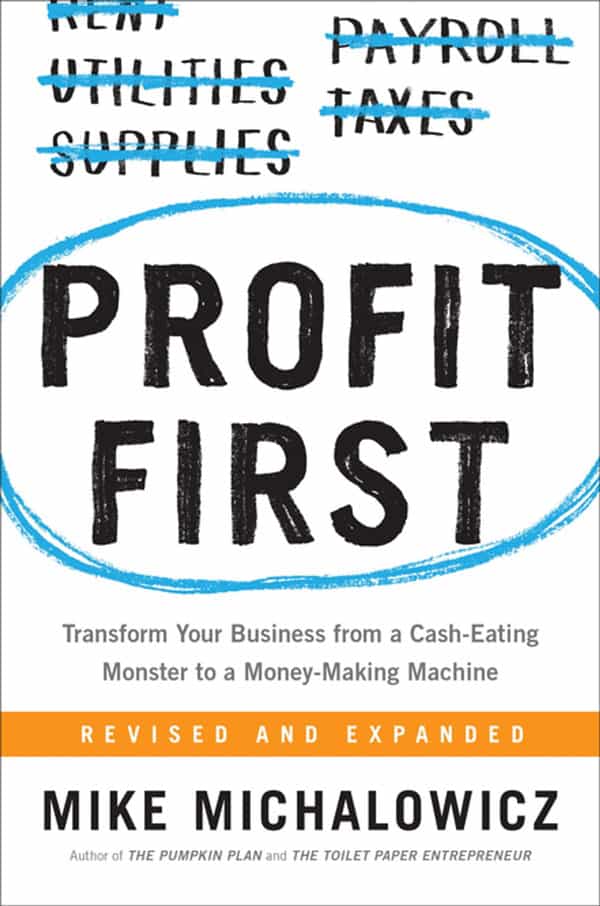
Profit First, Transform Your Business from a Cash-Eating Monster to a Money-Making Machine by Mike Michalowicz
Recommendation
This practical workbook can help small-business owners improve their companies. The core of entrepreneur Mike Michalowicz’s advice is self-evident: If you pay yourself and the government first – in profit, salary and taxes – you have to run your business with what’s left. In his analysis, focusing on expenses before anything else and martyring your profits and salary to reinvest in growth creates a never-satisfied beast you eventually have to kill. Michalowicz hones his simple but uncommon message relentlessly: Put “profit first†and thrive.
Take-Aways
Change your thinking from “Sales – Expenses = Profits†to “Sales – Profit = Expenses.â€
Do a few things well and strive for increased efficiency.
Resist the temptation to spend by allocating money to separate accounts.
Never, ever reinvest profit you’ve taken out of your firm back into it.
Address your debt aggressively, but pay yourself first.
Banish the obsolete idea that top line growth – sales – solves everything.
After you run the Profit First system for at least six months, consider ramping it up a notch.Â
Profit First Book Summary
Change your thinking from “Sales – Expenses = Profits†to “Sales – Profit = Expenses.â€
Entrepreneurs know the refrain: work long, hard hours and plow everything back into the business. Conventional wisdom says grow, grow, grow, and don’t think about profits until you do. But most new ventures that follow this advice don’t endure. Overall, “eight out of ten businesses fail, and the number one reason they fail is lack of profitability.â€
To be successful, you need to change your thinking. From the day you start your business to the day you sell or dissolve it, pay yourself first. This simple shift – from dreaming about taking a profit one day to taking a profit from day one – will improve your mental and financial health and save your business.Determine what you should spend to run your business by first deducting a profit, paying yourself a competitive salary and putting aside enough money to pay your taxes. Unless your business income exceeds $5 million or so, what you do is not at the level of the work of a Fortune 500 CEO, so pay yourself accordingly and reasonably. What’s left over after profit, taxes and owner compensation must be sufficient to cover your operating expenses. If it isn’t, your business is not viable. Align your expenses with what you can afford. If an expenditure leads to profit, keep it; if not, dump it.
“Profit must happen now and always. Profit must be baked into your business. Every day, every transaction, every moment. Profit is not an event. Profit is a habit.â€
Don’t let other entrepreneurs’ flashy cars and big houses fool you. Most live paycheck to paycheck under crushing debt. “Cash is king†– not accounts payable or revenue projections on a spreadsheet, but money in hand and in the bank. Preserve your cash. Cut your expenses and don’t add to them when you have a great month or quarter.
Do a few things well and strive for increased efficiency.
If your expenses don’t allow for profits or owner compensation, more sales only bring more expenses. Don’t chase business wherever an opportunity arises. Focus and rely on your core competencies.
“Many companies – even those that seem to have it all together – are one bad month away from total collapse.â€
The difficulty most business owners have with putting profits first resembles the struggle individuals have with diets. Many people lose weight but gain back even more. Habits prove hard to break, so work on making a profit-first attitude your routine. When you have money, you will find ways to spend it, even wastefully.When you withdraw profits, taxes and your salary from your business income first, you have far less to operate the business, so you have to figure out how do more with less.
Resist the temptation to spend by allocating money to separate accounts.
Set up five “foundational†accounts: One is for money coming in – label it “Income.†The second is for “Operating Expenses†(OpEx). A third is for “Taxes,†a fourth for “Owner Compensation,†and a fifth for “Profits.†Set up two more accounts that are out of sight at a separate bank: one for “Tax Hold†and the other for “Profit Hold.†Keeping these reserves away from your main accounts makes it difficult for you to tap into them. Never pay minimum balance fees on your seven accounts. If your bank insists on fees, switch banks.
“At the end of the day, the start of a new day and every second in between, cash is all that counts. It is the lifeblood of your business.â€
To figure out how much to put into each account, assess your business using the “Profit First†system. Either consult your latest income statements or use estimates. You don’t need precise numbers.
List your top line revenue before tax. If a significant amount of your expenses – at least one-quarter – goes to subcontractors, list those costs; most firms don’t have expenses here. Subtract subcontractor expenses from top line revenue to arrive at your third entry: “Real Revenue.†Record your profit, if any, from last year – not your salary, but profit disbursements or money in a bank account. Then, add your compensation and the compensation of any other owners. List what your company paid in corporate and owner income taxes. Put expenses from the past 12 months in the final row. Again, you don’t need exact numbers; sound estimates will do.
In the next column, list your aspirations – the percentages of your real revenue that should go into each category. This represents your targets as you get your business in order. Your goals here depend on the size of your business. Though imperfect, the targets work well across any industry. For any firm, aim at putting 15% in the Taxes account – remember, you don’t pay tax on all real revenue, only on owners’ compensation and profit. If you have funds left over at the end of the year, celebrate.
For firms with real revenue of up to $250,000, aim for profits of 5%, owner compensation of 50% and OpEx of 30%. For firms with real revenue up to $500,000, aim for 10%, 25% and 40% respectively At $500,000 to $1 million, use 15%, 20% and 50%. From $1 million to $5 million, your targets are 10% profits, 10% owners comp and 65% OpEx. At more than $10 million, use 17%, 3% and 65%. These numbers represent your goals, so move toward them slowly; don’t attempt, for example, to move from 0% profit to 10% on day one. Start at 1% and get to 10% over the course of a year or more, quarter by quarter.
“Profit First works. Period. Whether you choose the percentages I provided…or choose the path of assessing all the nuances of your business and industry…it will work.â€
With your accounts set up, immediately put everything into your Income account minus any payments outstanding. Transfer 1% from your Income account into your Profit account, whether that’s $1, $100 or more. If you have been withholding 5% for taxes, move it to 6%, and if you’ve been allocating 5% for owners compensation, make it 6%. These increases add up to 3% overall. Move the amounts in your Profit and Tax accounts to your Profit Hold and Tax Hold accounts at your other bank.
Start small, but increase your percentages toward your targets each quarter. Most firms will start with 0% past profits and 0% past tax, and target 1% in each account on day one. Everything else goes from your Income account to your OpEx account to cover all your expenses.
You can see that much of the money you take in goes out in operating expenses. If you can’t live on the owner compensation and profits you’ve allocated, because everything your company makes goes to pay expenses, then that business model is failing. To move toward your target percentages over the coming quarters, cut expenses, increase sales or both.
Never, ever reinvest profit you’ve taken out of your firm back into it.
You are cutting 3% from operating expenses because you’ve now allocated it to profit, taxes and owner compensation. Review your expenses and eliminate anything you don’t need to run your company efficiently and earn a profit. Negotiate all expenditures – excluding employee compensation – with your suppliers.
Put incoming receipts in your Income account. Pay from there into your Profit, Tax and Owner Compensation accounts on the 10th and 25th of each month. The remainder goes to your OpEx account, which you reduce each quarter.
Every three months – in addition to raising the percentages in your Profit, Taxes and Owner Compensation accounts – make quarterly tax payments and distribute 50% of your profits to yourself and any other owners or investors. Leave the remaining 50% of profit in your Profit Hold account as a reserve. If you owe more taxes at the end of the year, tap your profit account; otherwise, build a rainy day fund as a reserve against any kind of business disruption.
Address your debt aggressively, and pay yourself first.
Don’t attempt to pay your debts too quickly or all at once. Reverse your mind-set; pay down your borrowings before your expenses. Identify and prioritize your smallest debt, even if it has a lower interest rate than some of your larger liabilities. Crossing debt off your list can inspire a frugal attitude.
“Even when you and your business are in debt up to your eyeballs, you must establish a habit of putting your profit first. You must still (and always) pay yourself first.â€
When you have serious amounts of debt, cutting expenses becomes even more urgent. Don’t borrow any more than you already have. Comb through every single expense, from paper clips to people, and slash everything that is not essential to staying in business – cut the fat but avoid the muscle. People are probably your largest expense. No one wants to let employees go, especially if it’s through no fault of their own, but you may have to. Negotiate with your debtors and suppliers: Seek better terms, lower rates and even partial debt forgiveness. Cut back your lifestyle, brutally and all at once.
Banish the worn-out idea that top line growth – sales – solves everything.
Every entrepreneur wants to find a rainmaker who brings in the big sales and solves all the problems, but you might as well search for unicorns. Work on creating efficiencies instead. This serves you well because efficiencies never last – when you figure out how to do something better and drive up your margins, your competitors will follow. To maintain profits, always look for better, faster and cheaper paths. Get good at it.
“Make the game of winning based on efficiency, frugality and innovation, not on size, flair and looks.â€
It may seem impossible, but aim to do what you do best at half your current costs – in money and time – for twice the outcomes. Think about it, and find a way before your competitor does. Ditch bad clients. The Pareto Principle says that 80% of your profits most likely come from about 20% of your customers. Know which customers don’t contribute to your profit, and let them go diplomatically.
After you’ve run the Profit First system for at least six months, consider ramping it up a notch.
Set up a “Vault†account in which you place some of the profit you held in reserve and put it away to build a three-month stash – in case your revenues grind to a halt for whatever reason. Consider a big purchases account. If you know, for example, that you have a major annual expense, divide it by 12 and put that money aside in a separate account each month. Other accounts might include one for major equipment expenses, for subcontractor payments or for employee payroll that is separate from operating expenses.
“You get what you focus on, so stop focusing on expenses. Focus on profit, and the expenses will be taken care of by default.â€
If you take money from outside investors, set up an account for all of it and don’t touch it, except for its express purpose. When you want to hire, make sure that you can bring in between $150,000 to $250,000 in real revenue per employee – or more in industries like high-tech. Don’t base your lifestyle on your best business month or quarter. Instead, calculate the average of the past 12 months of real revenue, figure out a fair and reasonable salary, and live within it. Buy used, negotiate everything and think 10 times before purchasing anything, whether for yourself or for your firm.
If you keep working toward creating or maintaining your profit, owner compensation and tax percentages, your expenses will take care of themselves. Avoid thinking in terms of a “monthly nut†you have to cover. Concentrate instead on your allocations on the 10th and 25th of each month. Focus on profits first.
About the Author
Mike Michalowicz is head of Profit First Professionals. You can find an “Instant Assessment Form†for your business at mikemichalowicz.com.Â